Category: Health & Safety

  • Building a Safer, Healthier Workplace: 5 Ways to Show Real Commitment to Safety and Wellness

    Building a Safer, Healthier Workplace: 5 Ways to Show Real Commitment to Safety and Wellness

    True organizational commitment to safety and well-being means creating a culture where everyone, from senior leaders to frontline staff, understands that safety is everyone’s responsibility. It’s about weaving safety into everyday decisions, conversations, and values—not just policies.

    When it comes to running a successful organization, few things matter more than keeping your people safe and well. Workplace safety and well-being isn’t just about meeting regulations—it’s about showing genuine care for the people who make your organization thrive.

    When employees feel protected, supported, and valued, they’re more engaged, productive, and loyal. Here’s how to make that kind of culture a reality.


    1. Lead by Example

    Leadership sets the tone. When leaders model safe behavior, it sends a clear message that safety isn’t optional—it’s essential.

    That means showing up for safety meetings, participating in safety training, and following the same rules as everyone else. It also means being transparent when things go wrong and demonstrating accountability.

    In a recent CSSHSA pilot on musculoskeletal injury prevention on transfers and repositioning best practices, managers and staff jointly participated in training and identified ways to troubleshoot complex situations for individuals they support. It was a great example of how safety training can build team culture and engagement.

    Employees notice what leaders do far more than what they say. When leaders prioritize safety, others naturally follow.


    2. Make Safety Part of the Business Strategy

    Safety shouldn’t compete with productivity—it should drive it.

    Integrate safety and wellness objectives into your business strategy, budgets, and performance metrics. Track safety outcomes alongside operational results. Leading indicators such as number of staff trained on violence prevention or participation in workplace mental health programs to name a couple of types of indicators. When safety is linked to business goals, it reinforces that a safe, healthy workplace is a sign of success—not an obstacle to it. Tracking safety objectives makes good business too – Learn more about WorkSafeBC experience rating.


    3. Invest in Training and Education

    Providing ongoing training is one of the strongest indicators of genuine commitment. Go beyond basic compliance training to include interactive sessions, scenario-based learning, and workshops focused on mental health and stress management. Investment in training is a good way to drive improvements to an organization’s WCB experience rating. Learn more about CSSHSA Learning Centre and how we are supporting social services sector wit best practices in education and training.

    Well-trained employees are confident, capable, and far more likely to identify and address hazards before they become incidents.


    4. Empower Employees to Speak Up

    A truly safe workplace thrives on open communication. Employees should feel free to raise safety concerns, report hazards, and suggest improvements—without fear of blame or retaliation.

    Establish anonymous reporting channels, create joint health and safety committees, and regularly invite feedback. When employees feel heard, they become active partners in maintaining a safe workplace. Learn more about Psychological Health and Safety in the workplace.


    5. Recognize and Celebrate Safety Success

    Recognition fuels motivation. Acknowledge individuals and teams who go above and beyond to promote safety and wellness.

    Simple gestures—like thank-you notes, certificates, or shoutouts in team meetings—reinforce that safety is valued and appreciated. Recognition builds pride, strengthens culture, and helps keep safety top of mind across the organization. Watch our past Webinar on Building a Culture of Recognition.


    Final Thoughts

    Commitment to workplace safety and wellness is more than a checklist—it’s a reflection of your organization’s values.

    When safety is integrated into every decision and interaction, it sends a clear message: we care about our people. That commitment not only prevents injuries and stress—it builds trust, engagement, and long-term success.

    Because at the end of the day, a safe workplace isn’t just good for people—it’s good for business.

  • Heat Safety in Social Services: Protecting Clients & Staff This August

    Heat Safety in Social Services: Protecting Clients & Staff This August

    As summer comes to an end, it’s important to stay alert for the risk of heat stroke from rising temperatures. August is the hottest month in BC, and social services workers and the populations they serve are both at risk of heat stroke. Populations such as those living alone, seniors, people who are marginally housed, and those with health conditions are at increased risk during hot weather. It is important that both workers and employers can recognize heat exhaustion, heat stroke, and the common symptoms of these conditions.

    Heat exhaustion is a heat-related illness that occurs when your body is unable to handle the stress of heat and your internal temperature rises above its normal range (37 degrees). As you heat up, you tend to experience a variety of symptoms that can be attributed to general fatigue such as weakness, dizziness, nausea, muscle cramps, and possible confusion. This can make it difficult to determine whether what you are experiencing is heat exhaustion, which if left untreated can rapidly develop into heat stroke.

    Heat stroke is a life-threatening condition where your body heats up faster than it can cool down. It can develop quickly and without warning, causing your internal temperature to rise well above 40 degrees. It is important to immediately take measures to save people suffering from heat strokes as prolonged heat strokes can cause severe damage to various body systems. Many of the symptoms are similar to heat exhaustion with some key differences being that the one experiencing it is not acting how they normally act and they cannot cool down.

    If you ever find yourself or others showing these signs, call 911 right away and follow the following first aid steps immediately:

    • Move to a cool, shaded area
    • Apply cold wet cloths, ice, or cool water to head, face, neck, and groin if possible
    • Remove as many clothes as possible (including socks)
    • Encourage them to drink water, juice, or a sports drink but do not force it
    • Stay with them and keep checking symptoms, if they are not cooling down, let emergency services know immediately

    We must also do what we can to prevent the onset of heat illnesses. The following steps can help in prevention:

    • Provide workers and clients with water bottles or access to hydration stations and encourage regular water intake to stay hydrated
    • Issue heat warnings to workers and clients on days with forecasted hot temperatures
    • Educate workers on the signs and symptoms of heat exhaustion and stroke and how to respond
    • Prevent workers from working alone by partnering them up
    • Encourage workers and clients to wear cooler, loose-fitting clothing such as cotton and linen
    • Provide cool, ventilated areas for workers and clients to rest in
    • Avoid scheduling strenuous activities during peak heat hours
    • Place electric fans for ventilation in buildings with no A/C

    Heat stroke is dangerous when left untreated and unnoticed so we must stay prepared and proactive to protect both workers and clients in higher temperature conditions.

    Download and post Heat Exhaustion signage to inform others on signs and symptoms to watch out for.

  • CSSHSA’s e-Learning Roadmap to Launch

    CSSHSA’s e-Learning Roadmap to Launch

    Investing in health and safety training is key to preventing incidents, boosting efficiency and fostering a positive health and safety culture. Health and safety training empowers employees to identify potential hazards in the workplace, understand safety procedures, and take necessary precautions, ultimately reduce the risk of incidents and injuries, improving employee morale, and ensuring compliance with legal regulations; essentially creating a safer work environment for everyone involved.

    CSSHSA team in collaboration with our Board, Advisory Panel, and Community of Practice have identified a number of priority courses to develop for the Social Services sector. We have also been listening to the various organizations as part of our engagement and presentations to the sector.

    We are happy to report that we are well underway with our efforts. We are now at the stage of meaningful consultation with our members to ensure they reflect all lens’ of the sector (Indigenous lens, accessibility, etc.). We will be testing our Learning Management System (LMS) shortly, we are calling it the Learning Centre. The testing will be performed with our Advisory Panel, our Community of Practice, and we will be reaching out to various CSS organizations to ensure we consult in a meaningful way with our membership. We will be featuring our first 4 draft e-learning courses developed specifically for our sector:

    1. Trauma Informed Practice
    2. Violence Risk Assessment
    3. WHMIS
    4. Workplace Inspections

    Later in the spring, we will also be testing, 4 additional e-learning courses: Musculoskeletal Injury (MSI) Awareness and Prevention, OHS for Leaders, Incident Investigations and Respectful Workplace for Workers. We will also commence the development of violence prevention training in collaboration with SWITHC BC.

    We are planning to open course registration to our member organizations in May. We are looking forward to supporting our sector with high quality education and training and we are excited about this upcoming milestone with our team. We are also grateful for all the support of our various partners, including the employer organizations and unions that have been actively supporting our work for many years. We are also thankful for the support of the health authorities, the Federation of Social Services, WorkSafeBC and the BC Government. 

  • Celebrating 30 Years of Community Support: CSSHSA at the 2024 CSSEA Conference

    Celebrating 30 Years of Community Support: CSSHSA at the 2024 CSSEA Conference

    CELEBRATING 30 YEARS OF COMMUNITY SUPPORT:

    CSSHSA AT THE 2024 CSSEA CONFERENCE

    Community Social Services Employee Association (CSSEA) recently celebrated a milestone—its 30th Anniversary—held from October 9th to 11th. Our team was thrilled to meet members and listen to their insights on the important work they do in the sector. Here’s a look at the highlights from each day of the event:


    Day 1: October 9th – Workplace Mental Health Toolkit Presentation


    The conference kicked off with an informative session featuring our CEO, Tigran Bajgoric who introduced CSSHSA’s programs and services. He was joined by Jonny Morris, CMHA BC’s CEO, who discussed the valuable mental health services offered by CMHA to support individuals and organizations. Their presentations set the stage for the next session on workplace mental health.


    Our very own Psychological Health & Safety Consultant, Suncha Satney, joined forces with Geoff Moffett, CMHA’s Workplace Mental Health Facilitator, to present the Workplace Mental Health Toolkit. Their presentation focused on vital topics such as:


    • Reducing stigma around mental health in the workplace
    • Recognizing signs of mental health challenges in colleagues
    • Developing supportive communication skills
    • Practicing self-care in high-stress situations


    They also touched on the importance of creating a trauma-informed workplace, including strategies for supporting and debriefing employees who have experienced critical incidents. This session provided attendees with valuable tools to help foster a mentally healthy workplace environment. You can download their presentation here.


    Day 2: October 10th – Community Social Services Awards of Excellence


    On the second day of the conference, our team had the privilege of connecting with organizational leaders to discuss health and safety concerns. A recurring theme emerged: the mental health of workers. It was clear that many organizations are grappling with mental health challenges and how to best support their staff in an increasingly demanding environment.
    We also had the opportunity to meet leaders from remote communities, where limited resources—such as labour shortages and access to healthcare—present additional challenges. These conversations gave our team a deeper understanding of the struggles organizations face in promoting health and safety across BC.


    Later that day, we were honored to witness the Awards of Excellence ceremony, where remarkable individuals were recognized for their outstanding contributions to the sector. The stories of Darshan Nickolchuk, Aaron Rivard, Maureen Hunter, and Vicki Kipps were truly inspiring. Their work serves as a reminder of the importance of fostering a healthy environment for individuals passionate about serving communities. We are grateful for the opportunity to collaborate with such dedicated professionals in promoting a healthy and safe space for all.


    Day 3: October 11th – Coffee Break Sponsored by CSSHSA


    On the final day of the conference, CSSHSA sponsored a Coffee Break for attendees. We provided smoothies and granola bars which were a big hit! During the break, our team had the chance to chat with attendees about who we are, what we do, and how we support the health and safety of organizations in the sector. It was great to connect with so many people who share our commitment to improving workplace well-being. We appreciate everyone who stopped by to share their thoughts and insights with us!
    Looking Ahead: Continuing Our Commitment to Health and Safety
    The CSSEA Conference was just the beginning of our ongoing journey. We are excited to continue participating in future conferences, engage more meaningfully with our members, and provide valuable health and safety support to a sector that is so dedicated to caring for others.


    Thank you to everyone who took the time to visit our booth and engage in meaningful conversations. We look forward to working together to make a positive impact in your communities!

  • BCIT First-Year Health and Safety Program Students

    BCIT First-Year Health and Safety Program Students

    BCIT First-Year Health and Safety Program Students

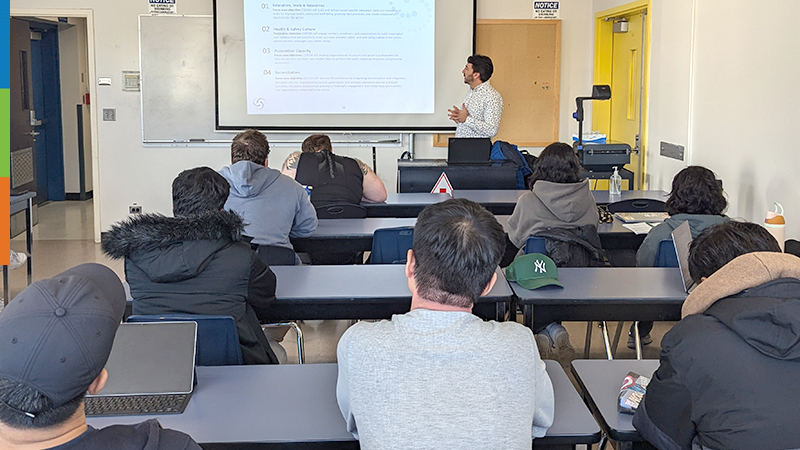
    The young minds of first-year students in BCIT’s Health and Safety program are embarking on a rewarding journey toward shaping safer, healthier workplaces. Whether their goal is to prevent workplace injuries, promote mental well-being, or ensure regulatory compliance, their role will make a tangible impact on people’s lives. This is why the Community Social Services Health and Safety Association (CSSHSA) was eager to introduce and enlighten them about a sector dedicated in making an impact and uplifting communities

    The field of health and safety is dynamic and multidisciplinary, combining technical knowledge, problem-solving skills, and a deep understanding of human behavior. Early in their studies, students focus on building a strong foundation in core principles like hazard recognition, risk assessment, and workplace psychological health. These fundamentals will prepare them to tackle real-world challenges with confidence. In social services, the challenges can be even more complex as the sector deals mainly with people, rather than machines or equipment, which makes the work much more unpredictable.

    Our CEO, Tigran Bajgoric, presented on the difference between SafeCareBC, SWITCH BC and CSSHSA, and the opportunities that are available in the social services sector. He also talked about his past experiences, the ethical dilemmas students are likely to face in their career, and the chance to make a real difference in the span of their career.

    Networking is a critical part of the student’s success in this field. Connecting with your peers, instructors, and industry professionals is important. CSSHSA invited students to attend industry events to gain exposure to real-world applications and best practices.

    Our CEO also reminded students that health and safety is about people. Empathy, communication, and active listening are as important as technical skills. By prioritizing worker well-being, you’ll not only meet compliance standards but also foster a culture where everyone thrives.

    Welcome to the field—your passion and dedication will help create workplaces where everyone feels safe and supported!